
Korean recipe
Mul naengmyeon
Buckwheat noodles sit in an icy, carefully chilled beef-radish broth with cucumber, pear, pickled radish, mustard, and hard-cooked egg.
South Korea

01
Ingredients
- 500 g
beef brisket
- 2.5 L
cold water for broth
- 300 g
Korean radish, divided
- 200 g
yellow onion, halved
- 20 g
garlic cloves, crushed
- 15 g
fresh ginger, sliced
- 400 g
dried naengmyeon noodles
- 200 g
Asian pear, peeled and thinly sliced
- 200 g
cucumber, thin matchsticks
- 2
large eggs
- 80 ml
rice vinegar, divided
- 35 g
granulated sugar, divided
- 20 ml
Korean soup soy sauce
- 18 g
fine salt, divided
- 20 g
Korean hot mustard paste
- 800 g
ice cubes for chilling
02
Method
- 01
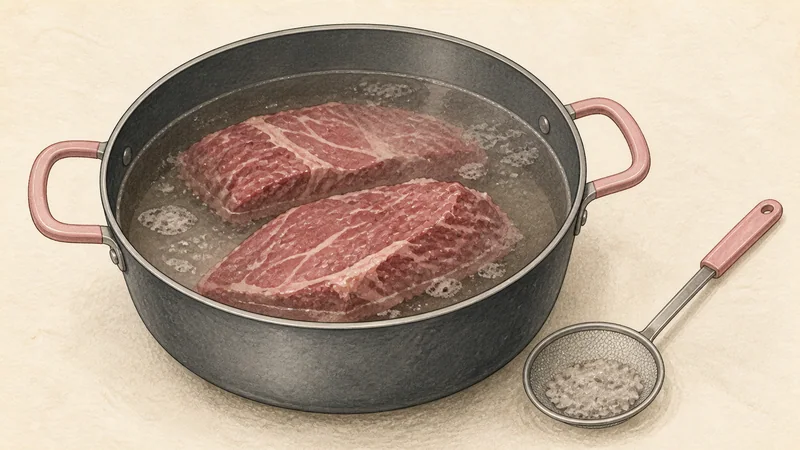
Start the beef in cold water
Put brisket and 2.5 L cold water in a large pot and bring slowly to a boil over medium heat, about 20 minutes. Skim grey foam before it disperses.
Cooking-step illustration, not a photograph - 02
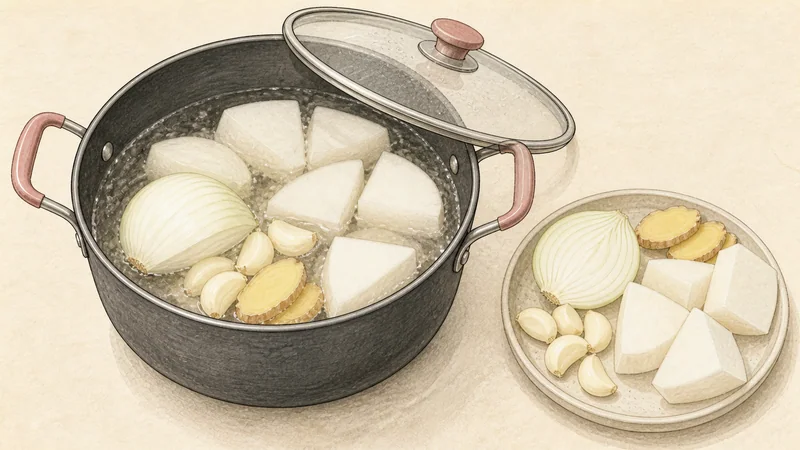
Add broth aromatics
Add onion, garlic, ginger, and 200 g radish in large pieces. Lower to a bare simmer, leaving the lid slightly ajar so the broth stays clear.
Cooking-step illustration, not a photograph - 03
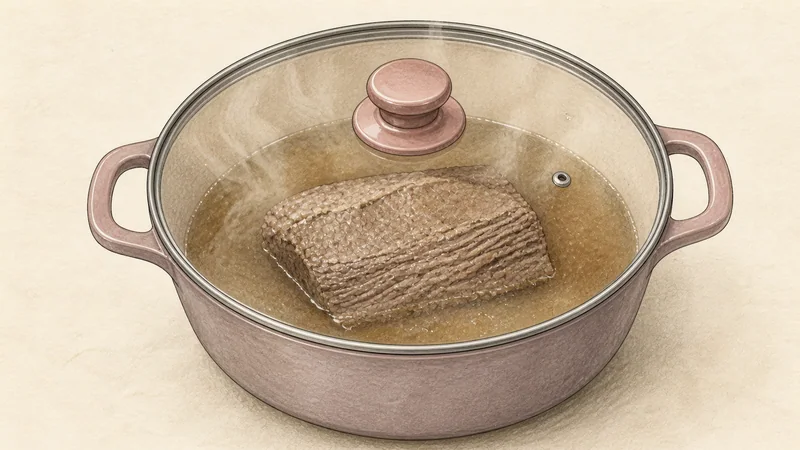
Simmer until the brisket is tender
Simmer 60–75 minutes, turning the beef once, until a skewer enters with light resistance and the centre reaches at least 71°C. Do not boil hard.
Cooking-step illustration, not a photograph - 04
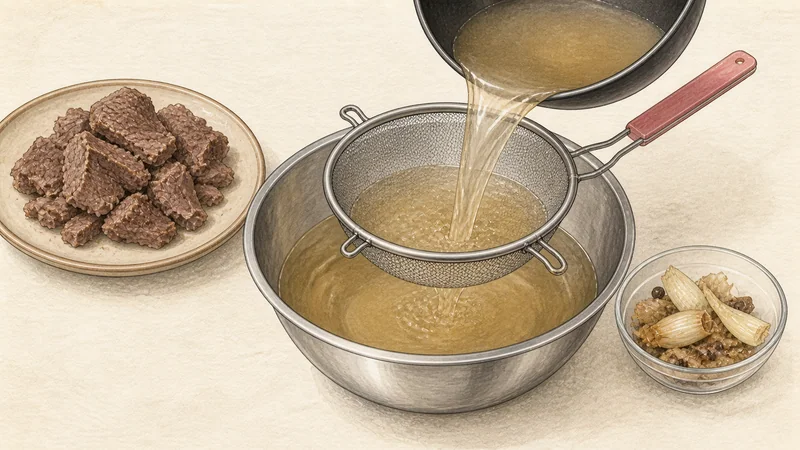
Strain the clear broth
Move beef to a clean plate. Strain the broth through a fine sieve into a clean metal bowl and discard cooked aromatics; measure 1.6 L broth, adding hot water only if short.
Cooking-step illustration, not a photograph - 05
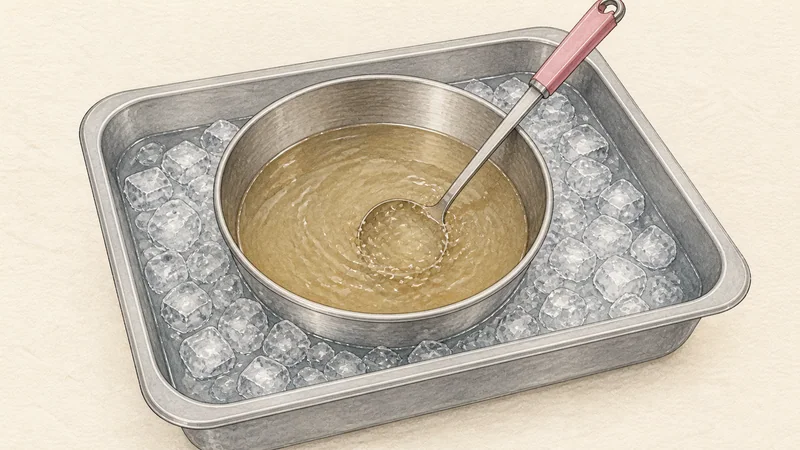
Cool the broth rapidly
Set the metal bowl in a sink with 800 g ice and cold water. Stir until the broth falls below 21°C within 2 hours, then cover and refrigerate at 4°C or colder.
Cooking-step illustration, not a photograph - 06
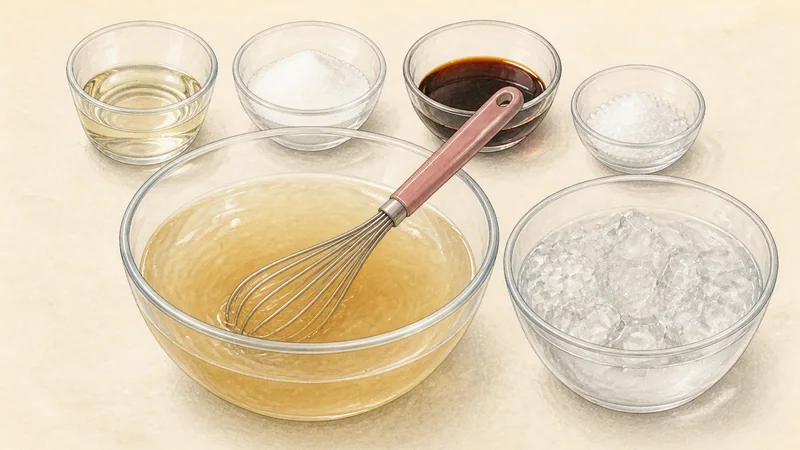
Season the chilled broth
When cold, remove solid fat. Stir in 40 ml rice vinegar, 20 g sugar, soup soy sauce, and 10 g salt until dissolved; chill at least 3 hours, then taste ice-cold before adjusting.
Cooking-step illustration, not a photograph - 07
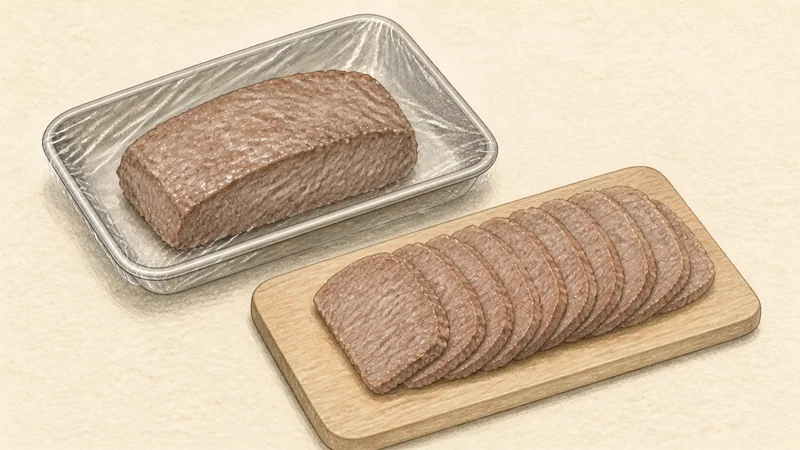
Chill and slice the beef
Cool beef within 2 hours, cover, and refrigerate. Once firm, slice 2 mm across the grain and keep chilled; allot about 60 g per bowl.
Cooking-step illustration, not a photograph - 08
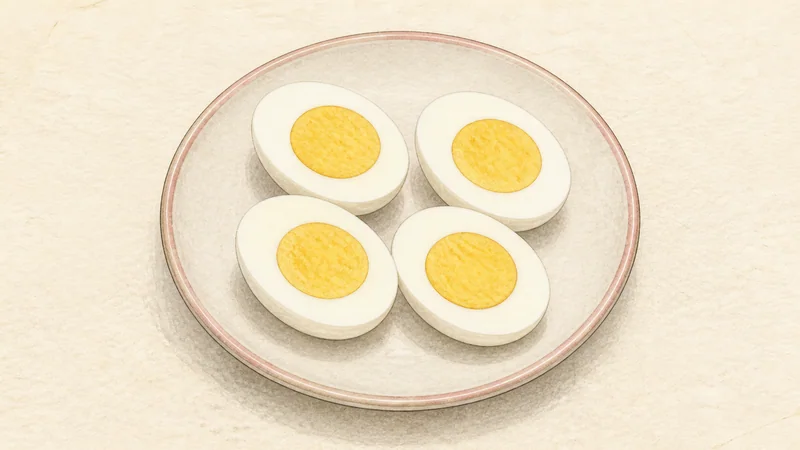
Hard-cook the eggs
Lower eggs into boiling water and cook 10 minutes. Cool in ice water 5 minutes, peel, and halve; each egg must reach 74°C and have a fully set white and yolk.
Cooking-step illustration, not a photograph - 09
Quick-pickle the radish
Slice the remaining 100 g radish into paper-thin half-moons. Toss with 20 ml rice vinegar, 10 g sugar, and 4 g salt and refrigerate 30 minutes, then drain.
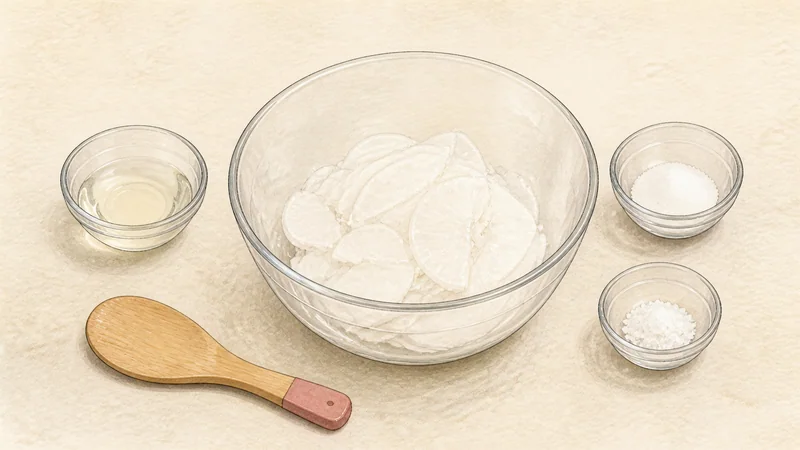
Cooking-step illustration, not a photograph - 10
Prepare cold garnishes
Keep cucumber, pear, drained radish, sliced beef, and halved eggs covered at 4°C or colder. Mix mustard with the remaining 20 ml rice vinegar for serving.
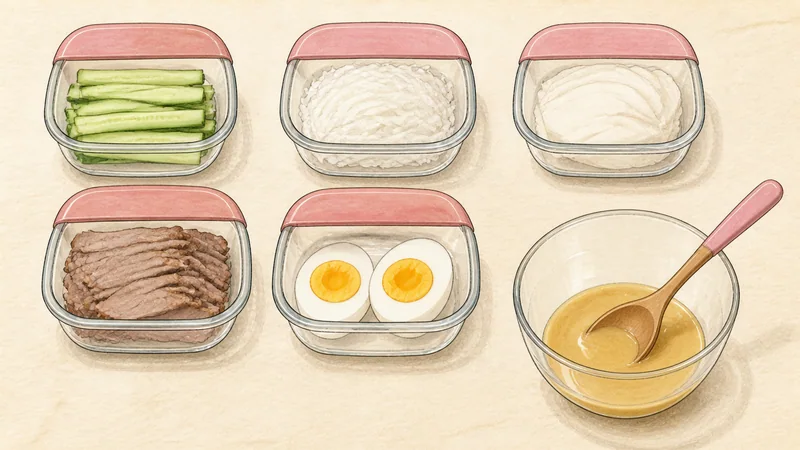
Cooking-step illustration, not a photograph - 11
Boil the noodles briefly
Bring at least 4 L water to a rolling boil. Loosen noodles and cook for the packet's lower time, usually 2–3 minutes, testing for a resilient strand with no hard centre.
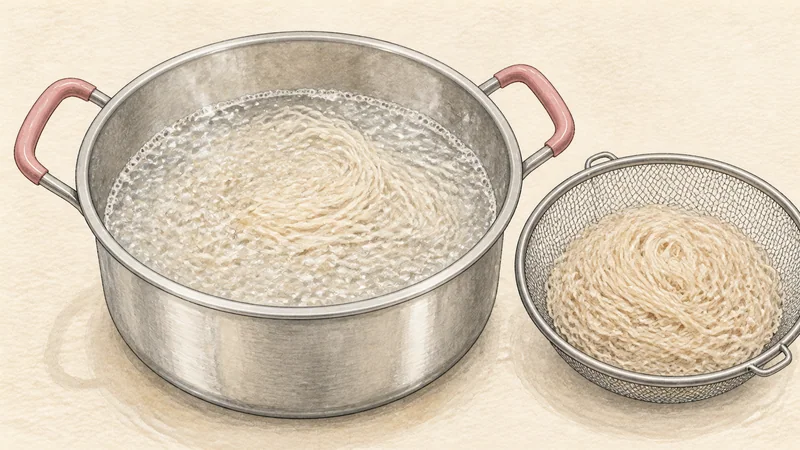
Cooking-step illustration, not a photograph - 12
Rinse until completely cold
Drain immediately and rinse under very cold running water for 60 seconds, rubbing gently to remove surface starch. Finish in ice water 30 seconds and drain forcefully so broth is not diluted.
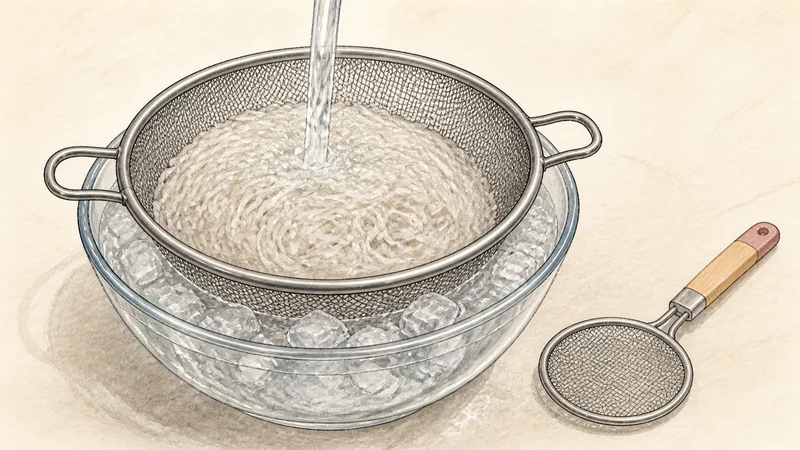
Cooking-step illustration, not a photograph - 13
Build four icy bowls
Divide noodles into four chilled bowls and pour 400 ml icy broth into each. Add 60 g beef, cucumber, pear, radish, and half an egg; serve mustard vinegar separately and eat immediately.
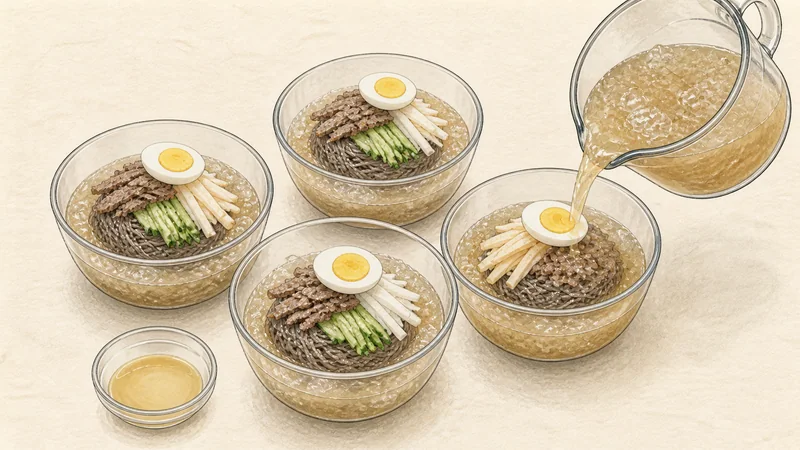
Cooking-step illustration, not a photograph


03
Sources and photo credit
This standardized method was independently rewritten after cross-checking the references below. Recipe Nest Vault does not claim that the credited photographer cooked from this exact version.
Recipe references
Mul-naengmyeon 2 — Photograph by chomjong; CC BY 2.0.
Step illustrations: Original illustrations created by Recipe Nest Vault with OpenAI image_gen.
More Korean recipes
More Korean recipes

1 hr 10 min
Vegetable bibimbap

1 hr
Beef bulgogi

7 hr