
Korean recipe
Vegetable bibimbap
Warm rice is arranged with five separately seasoned vegetables, a pasteurized fried egg with a set white and soft yolk, sesame, and a measured gochujang sauce.
South Korea

01
Ingredients
- 300 g
short-grain white rice
- 360 ml
water for cooking rice
- 200 g
soybean sprouts, rinsed
- 200 g
spinach, trimmed
- 150 g
zucchini, 5 cm matchsticks
- 100 g
carrot, 5 cm matchsticks
- 100 g
fresh shiitake mushrooms, sliced
- 4
pasteurized large eggs
- 60 g
gochujang
- 30 ml
Korean soup soy sauce, divided
- 30 ml
toasted sesame oil, divided
- 20 ml
neutral cooking oil, divided
- 15 ml
water for gochujang sauce
- 10 g
garlic, finely grated
- 8 g
toasted sesame seeds
- 6 g
fine salt, divided
02
Method
- 01
Rinse and soak the rice
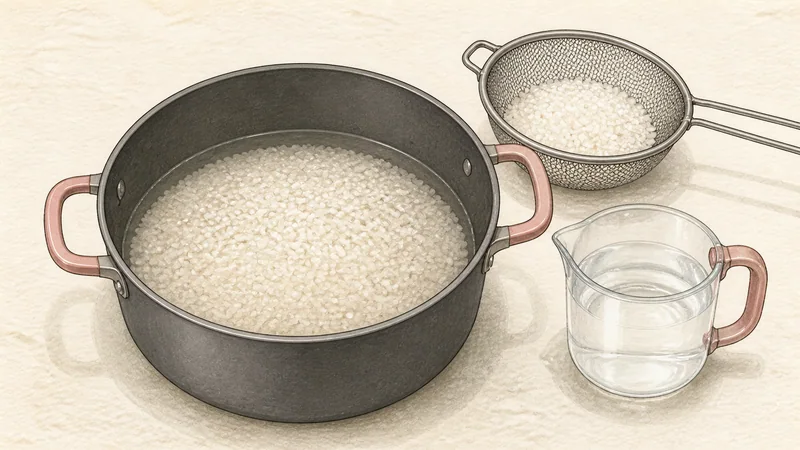
Rinse 300 g rice until the water is mostly clear, drain, then soak it in 360 ml fresh water for 20 minutes in the cooking pot.
Cooking-step illustration, not a photograph - 02
Cook and rest the rice
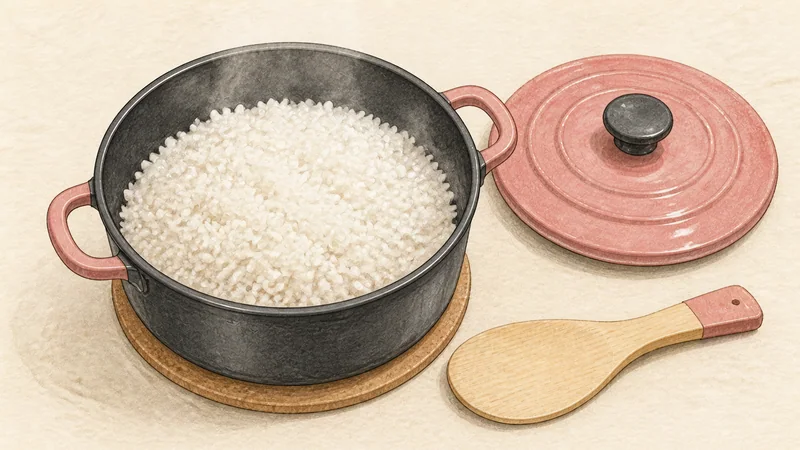
Cover, bring to a boil over medium heat, reduce to the lowest heat for 12 minutes, then turn off the heat and rest covered for 10 minutes. Fluff without crushing the grains.
Cooking-step illustration, not a photograph - 03
Mix the gochujang sauce
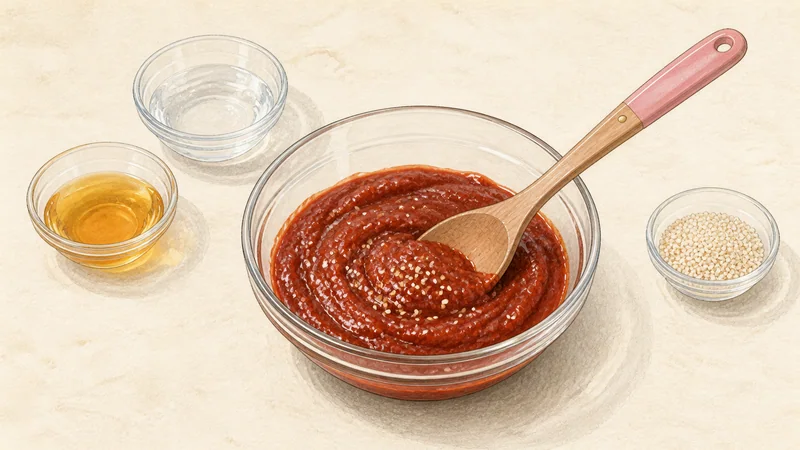
Stir 60 g gochujang with 15 ml water, 10 ml sesame oil, and 2 g sesame seeds until smooth; set aside without adding it to the vegetables.
Cooking-step illustration, not a photograph - 04
Cook and season the sprouts
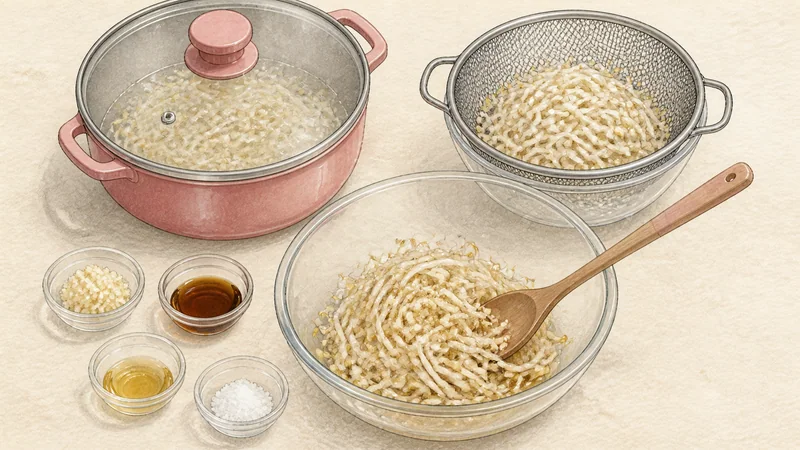
Put the sprouts in 500 ml boiling water, cover, and cook 4 minutes. Drain, cool briefly, then toss with 5 ml soup soy sauce, 3 ml sesame oil, 2 g garlic, and 1 g salt.
Cooking-step illustration, not a photograph - 05
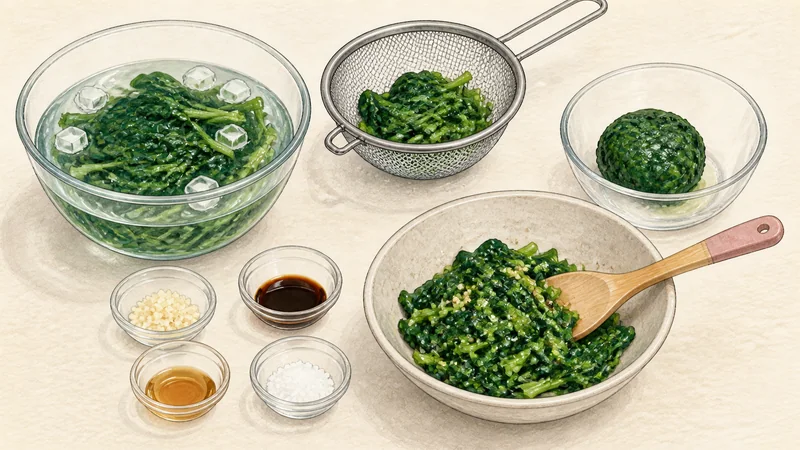
Blanch and season the spinach
Blanch spinach in boiling water for 30 seconds, cool in cold water, and squeeze firmly. Cut once, then mix with 5 ml soup soy sauce, 3 ml sesame oil, 2 g garlic, and 1 g salt.
Cooking-step illustration, not a photograph - 06
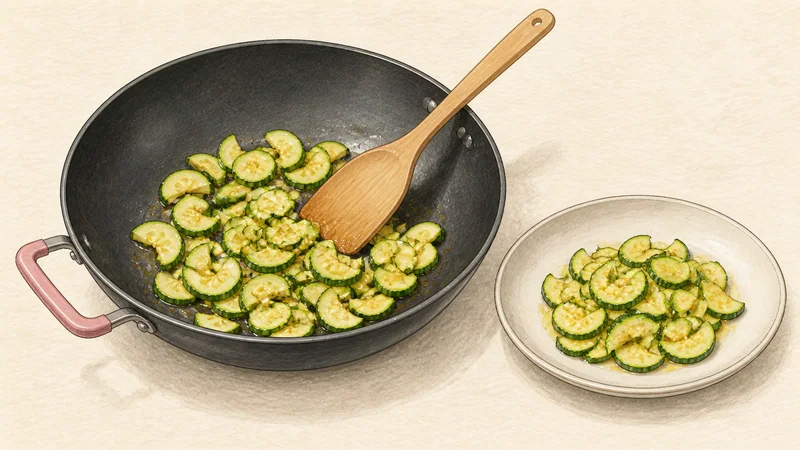
Sauté the zucchini
Heat 5 ml neutral oil over medium-high heat. Stir-fry zucchini with 1 g salt for 2 minutes, until flexible but still green; transfer to a separate plate.
Cooking-step illustration, not a photograph - 07
Sauté the carrot
Add 5 ml oil to the same pan and stir-fry the carrot with 1 g salt for 2–3 minutes, until bright and just tender; keep it separate from the other vegetables.

Cooking-step illustration, not a photograph - 08
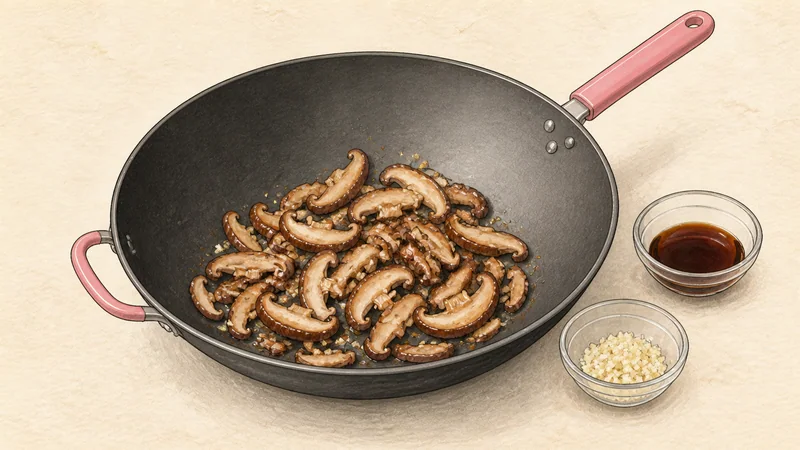
Brown the shiitake
Add 5 ml oil and the shiitake. Cook 3 minutes until the moisture evaporates, then add 10 ml soup soy sauce and 2 g garlic and stir 30 seconds; remove from the pan.
Cooking-step illustration, not a photograph - 09
Fry the pasteurized eggs
Heat the remaining 5 ml oil over medium and fry the 4 pasteurized eggs without overlapping. Cover for 2–3 minutes until every white is fully opaque while the yolks stay hot, glossy, and domed. If only unpasteurized eggs are available, continue covered until the yolks are firm and the eggs reach 74°C.

Cooking-step illustration, not a photograph - 10
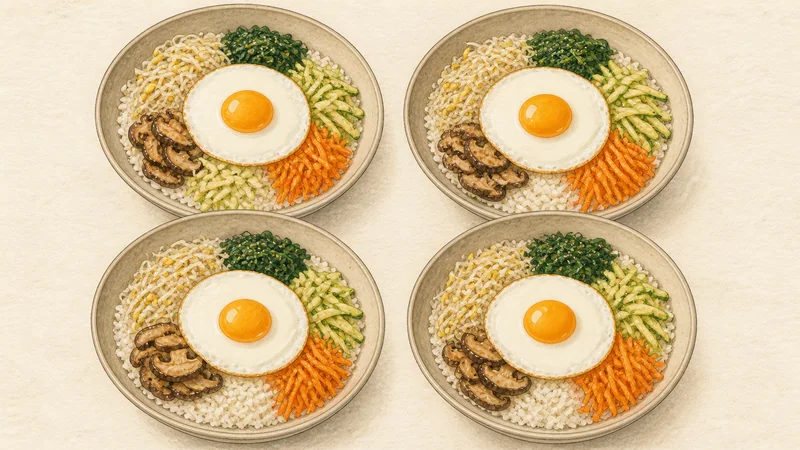
Arrange five vegetable sections
Divide the hot rice among four wide bowls. Arrange sprouts, spinach, zucchini, carrot, and shiitake in separate sections so every ingredient remains visible, then place one egg in the centre.
Cooking-step illustration, not a photograph - 11
Season, mix, and serve
Drizzle the remaining 4 ml sesame oil over the bowls and scatter the remaining 6 g sesame seeds. Serve the gochujang sauce alongside; begin with 15 g per bowl and mix thoroughly before adding more.
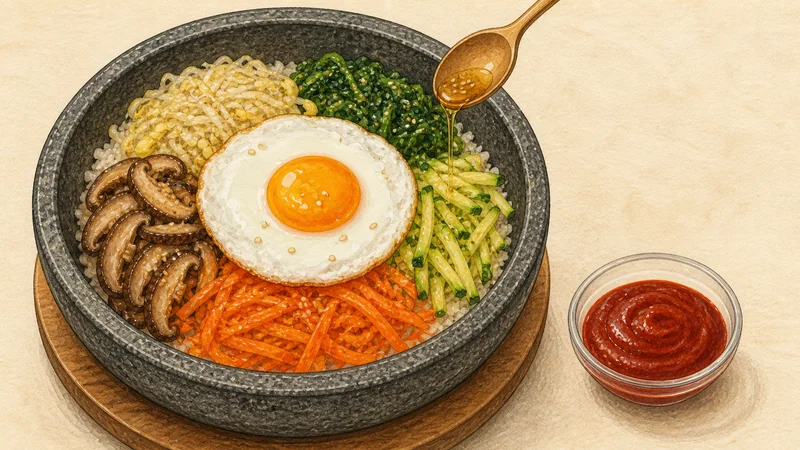
Cooking-step illustration, not a photograph


03
Sources and photo credit
This standardized method was independently rewritten after cross-checking the references below. Recipe Nest Vault does not claim that the credited photographer cooked from this exact version.
Recipe references
Bibimbap with egg — Photograph by Cjkennedy15; CC BY-SA 4.0.
Step illustrations: Original illustrations created by Recipe Nest Vault with OpenAI image_gen.
More Korean recipes
More Korean recipes

1 hr
Beef bulgogi

7 hr
Korean grilled short ribs

40 min