
Korean recipe
Vegetable japchae
Sweet-potato noodles are seasoned while warm and folded with separately cooked garlic chives, onion, carrot, red pepper, and enoki mushrooms.
South Korea

01
Ingredients
- 300 g
Korean sweet-potato glass noodles
- 150 g
garlic chives, cut into 5 cm lengths
- 180 g
yellow onion, thinly sliced
- 180 g
enoki mushrooms, root base removed and separated
- 120 g
carrot, 5 cm matchsticks
- 120 g
red bell pepper, 5 cm strips
- 80 ml
Korean soy sauce, divided
- 35 g
brown sugar
- 35 ml
toasted sesame oil, divided
- 30 ml
neutral cooking oil, divided
- 15 g
garlic, finely grated
- 10 g
toasted sesame seeds
- 4 g
fine salt, divided
- 2 g
black pepper
02
Method
- 01
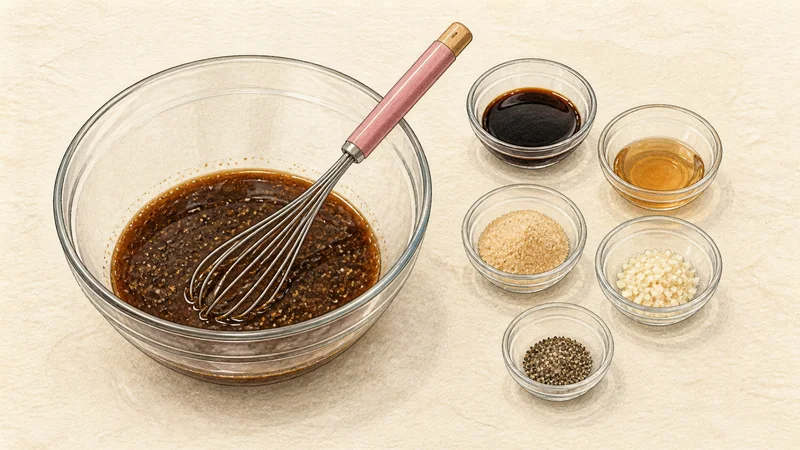
Mix the noodle seasoning
Stir 55 ml soy sauce, brown sugar, 20 ml sesame oil, 10 g garlic, and black pepper until the sugar dissolves. Keep 25 ml soy sauce, 15 ml sesame oil, and 5 g garlic for the vegetables and finish.
Cooking-step illustration, not a photograph - 02
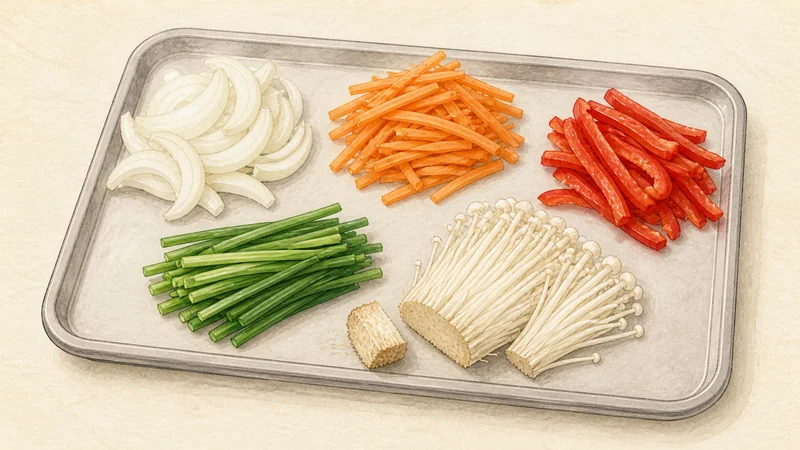
Prepare the vegetables
Cut onion, carrot, red pepper, and garlic chives to roughly 5 cm lengths and no more than 5 mm thick where applicable. Trim 2 cm from the enoki root base and separate it into pencil-thick bundles; keep every vegetable separate.
Cooking-step illustration, not a photograph - 03
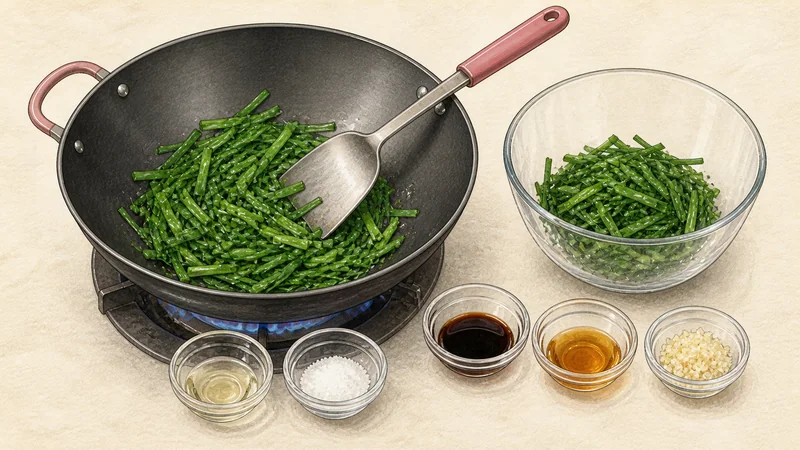
Quickly wilt the garlic chives
Heat 5 ml neutral oil over medium-high. Toss garlic chives with 1 g salt for 45 seconds, just until flexible but still bright green. Turn off the heat, mix in 5 ml soy sauce, 5 ml sesame oil, and 2 g garlic, then transfer to the mixing bowl.
Cooking-step illustration, not a photograph - 04
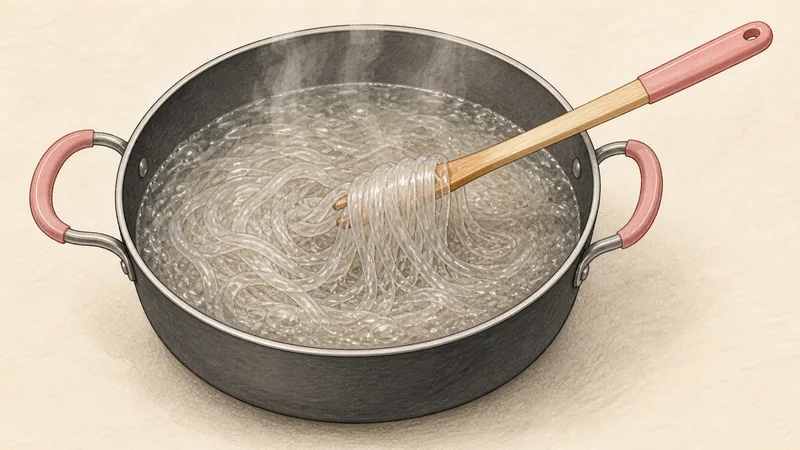
Cook the glass noodles
Boil noodles in at least 3 L water for 7–8 minutes, stirring twice, until translucent and chewy with no hard core. Follow texture rather than extending blindly to the packet maximum.
Cooking-step illustration, not a photograph - 05
Drain, cut, and season noodles
Drain thoroughly without rinsing, cut the hot noodles twice with kitchen scissors, and immediately toss with the prepared noodle seasoning. Spread in a wide bowl so they do not clump.
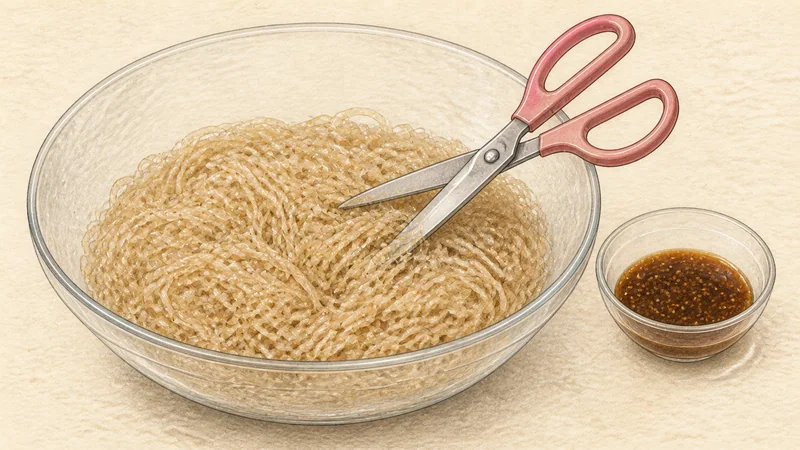
Cooking-step illustration, not a photograph - 06
Soften the onion
Heat 5 ml neutral oil over medium-high. Stir-fry onion with 1 g salt for 3 minutes until translucent at the edges but not browned; add it to the noodles.
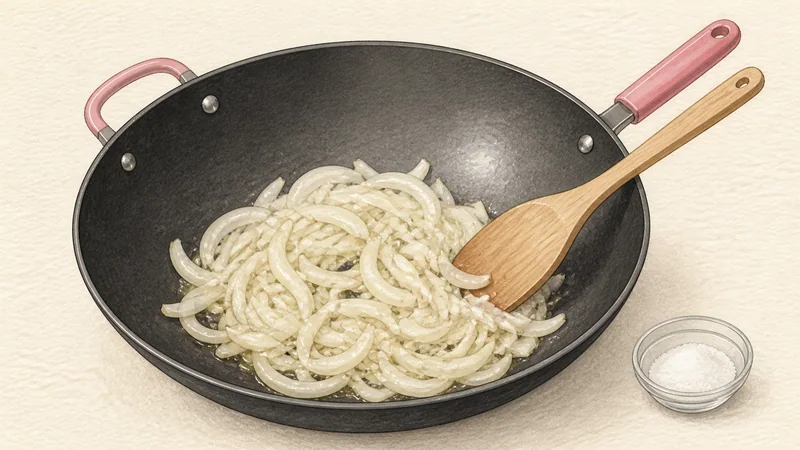
Cooking-step illustration, not a photograph - 07
Cook the carrot
Add 5 ml oil and stir-fry carrot with 1 g salt for 3 minutes, until flexible and bright. Transfer immediately so it does not lose colour.
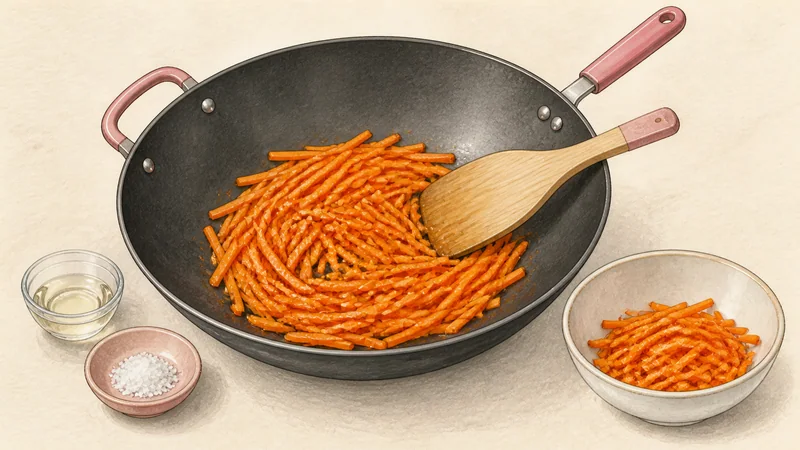
Cooking-step illustration, not a photograph - 08
Cook the red pepper
Add 5 ml oil and stir-fry red pepper with 1 g salt for 2 minutes. Stop while it is still crisp at the centre, then add it to the bowl.
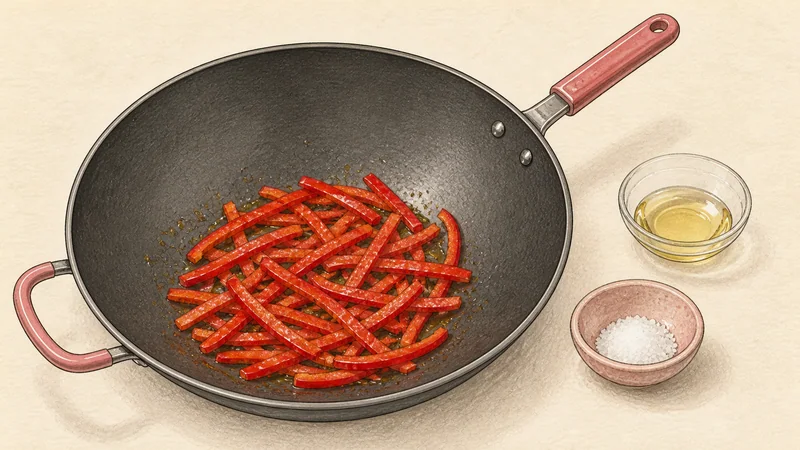
Cooking-step illustration, not a photograph - 09
Cook the enoki
Add the remaining 10 ml neutral oil and the enoki bundles. Cook 2–3 minutes until flexible with a few pale-gold edges, then add 15 ml soy sauce and the remaining 3 g garlic and stir 30 seconds.
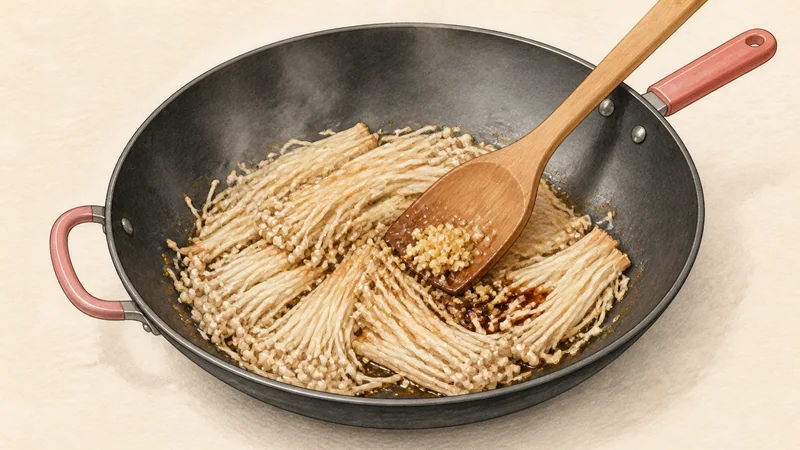
Cooking-step illustration, not a photograph - 10
Fold everything together
Add the hot enoki and every cooked vegetable to the seasoned noodles. Wearing food-safe gloves or using two spatulas, lift and fold for 2 minutes so the noodles, chives, and enoki stay visibly distinct.
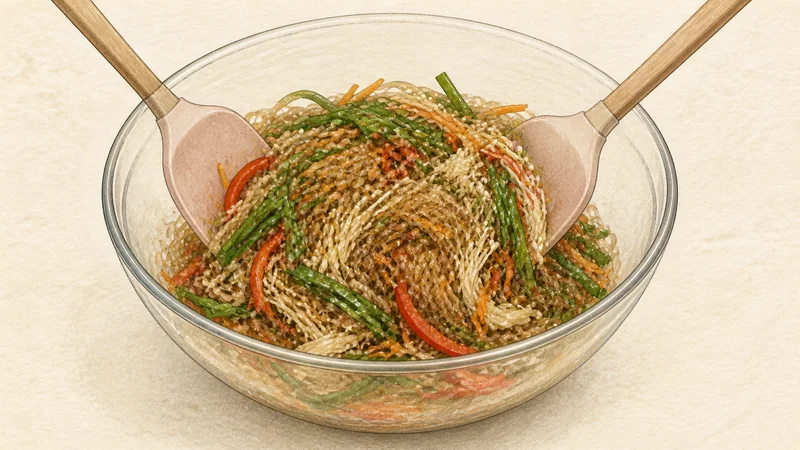
Cooking-step illustration, not a photograph - 11
Balance while warm
Taste a noodle with one piece of vegetable. Add no more than 5 ml extra soy sauce only if needed; the noodles absorb salt as they stand, so avoid making them salty now.
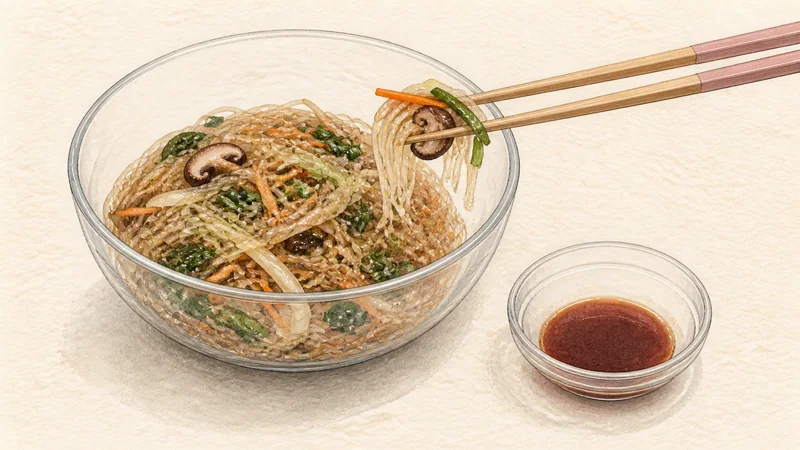
Cooking-step illustration, not a photograph - 12
Finish with sesame
Fold in the remaining 10 ml sesame oil and all sesame seeds. Serve warm or at room temperature within 2 hours, separating the strands once more just before plating.
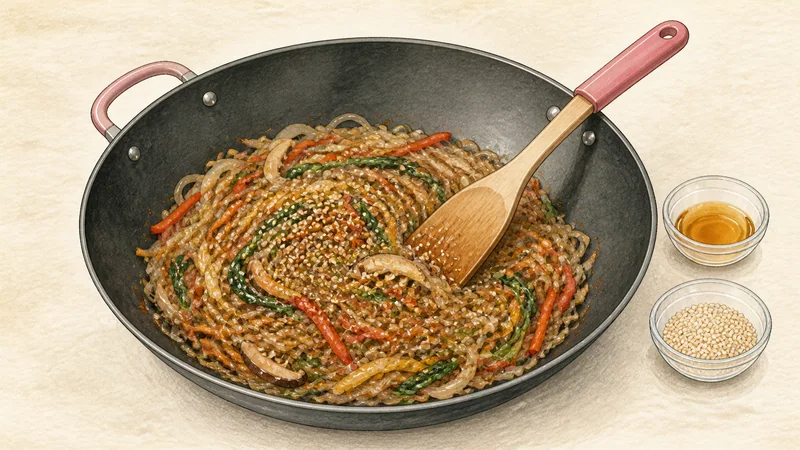
Cooking-step illustration, not a photograph


03
Sources and photo credit
This standardized method was independently rewritten after cross-checking the references below. Recipe Nest Vault does not claim that the credited photographer cooked from this exact version.
Recipe references
Korean cuisine-Japchae-04 — Photograph by Alan Chan; CC BY-SA 2.0.
Step illustrations: Original illustrations created by Recipe Nest Vault with OpenAI image_gen.
More Korean recipes
More Korean recipes

1 hr 10 min
Vegetable bibimbap

1 hr
Beef bulgogi

7 hr