
Spanish recipe
Calamares a la Romana
Spanish battered squid rings with a thin, crisp golden shell and tender centre. Dry squid, a cold aerated batter and 180°C oil are the key controls: the coating sets fast and the squid leaves the fryer before it turns rubbery.
Spain / Madrid

01
Ingredients
- 700 g
cleaned squid tubes and tentacles
- 170 g
all-purpose flour, plus 30 g for dusting
- 2
large eggs, cold
- 200 ml
ice-cold sparkling water
- 8 g
baking powder
- 6 g
fine salt, divided
- 1.2 L
mild olive oil or neutral high-heat oil for frying
- 1
lemon, cut into wedges
02
Method
- 01
Cut and dry the squid thoroughly
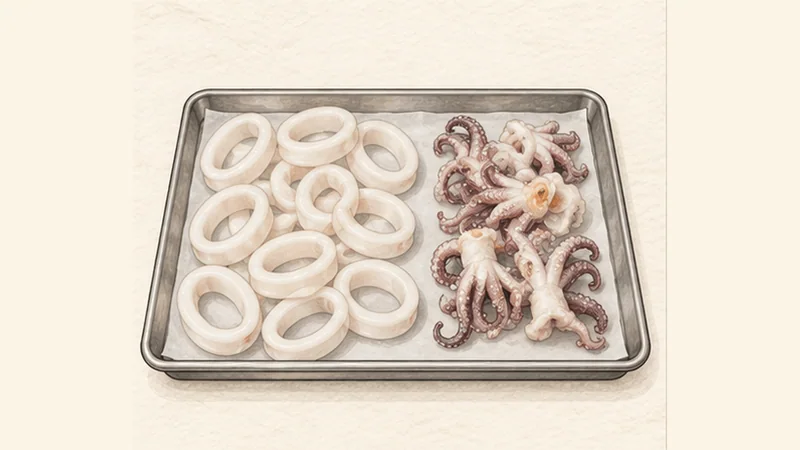
Cut the squid tubes crosswise into 1 cm rings and leave the tentacles whole if small. Pat every piece completely dry, season with 2 g salt and refrigerate uncovered for 10 minutes while the batter is mixed.
Cooking-step illustration, not a photograph - 02
Mix a cold, light batter
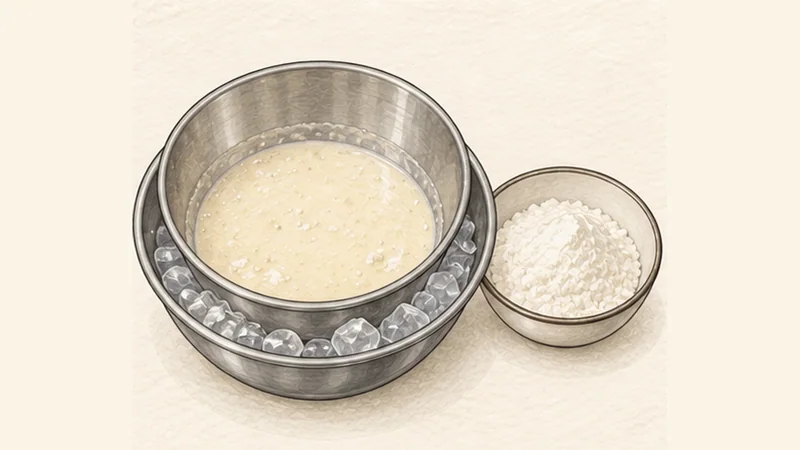
Whisk the 2 cold eggs with 200 ml ice-cold sparkling water. In another bowl combine 170 g flour, 8 g baking powder and 2 g salt. Whisk wet into dry for only 20–30 seconds; small lumps are fine. Keep the batter over ice and use within 15 minutes.
Cooking-step illustration, not a photograph - 03
Heat the oil to 180°C
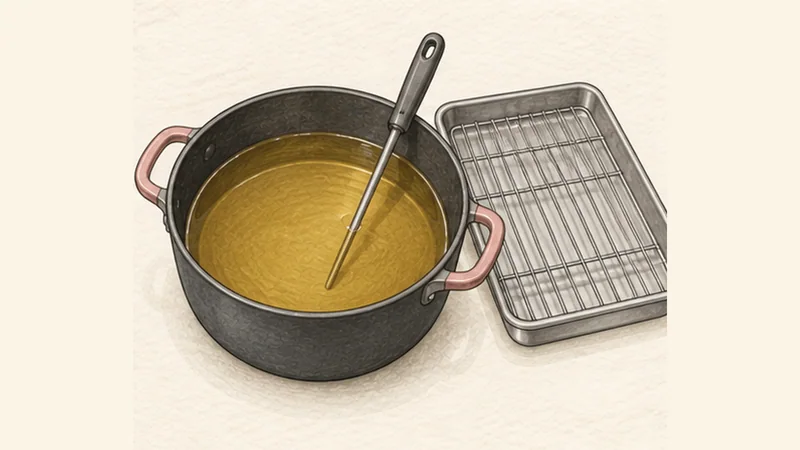
Heat the 1.2 L frying oil in a deep heavy pan to 180°C. Set a rack over a tray nearby. Keep the oil between 175–185°C throughout frying and allow it to recover between batches.
Cooking-step illustration, not a photograph - 04
Dust, batter and fry in small batches
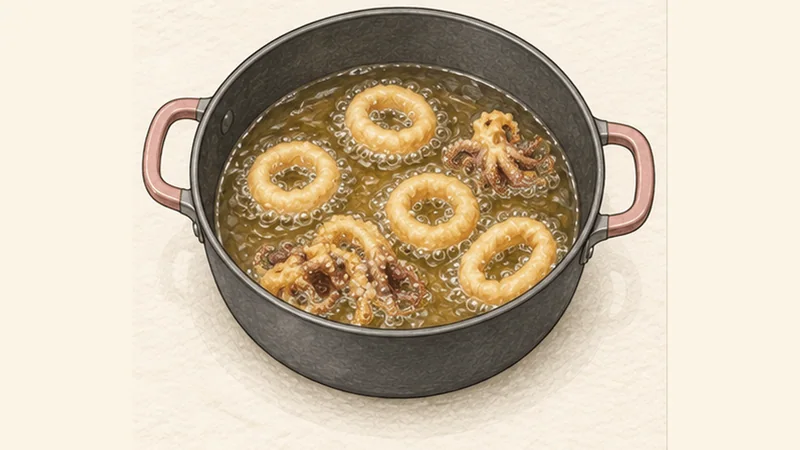
Toss one quarter of the squid with the 30 g dusting flour, shaking off excess. Dip into the cold batter, let excess drip for 2–3 seconds, then lower pieces separately into the oil. Fry 2–3 minutes, turning once, until the coating is evenly golden. Repeat for four batches.
Cooking-step illustration, not a photograph - 05
Drain, season and serve immediately
Move each golden batch to the rack and season while hot with part of the remaining 2 g salt. Let each batch drain for 2 minutes without stacking. Serve immediately with lemon wedges; the crust should be crisp and the squid tender, not tightly rubbery.
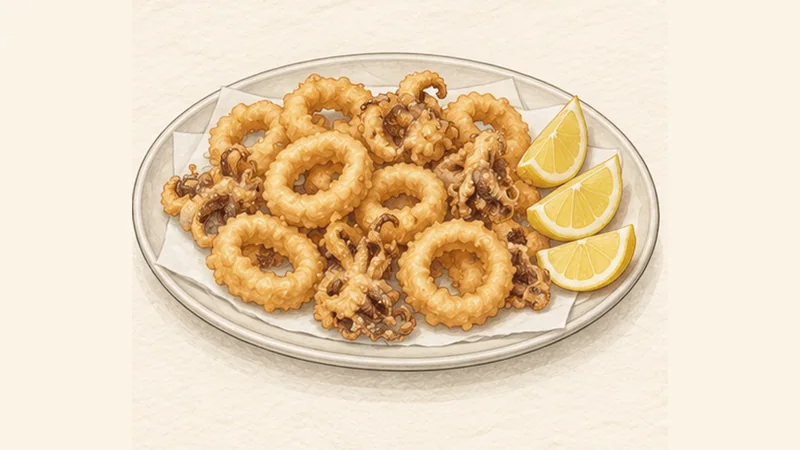
Cooking-step illustration, not a photograph


03
Sources and photo credit
This standardized method was independently rewritten after cross-checking the references below. Recipe Nest Vault does not claim that the credited photographer cooked from this exact version.
Recipe references
Calamares a la Romana-2009 — Photograph by Tamorlan; CC BY 3.0.
Step illustrations: Original illustrations created by Recipe Nest Vault with OpenAI image_gen.
More Spanish recipes
More Spanish recipes

1 hr 35 min
Paella Valenciana

50 min
Tortilla Española

2 hr 20 min